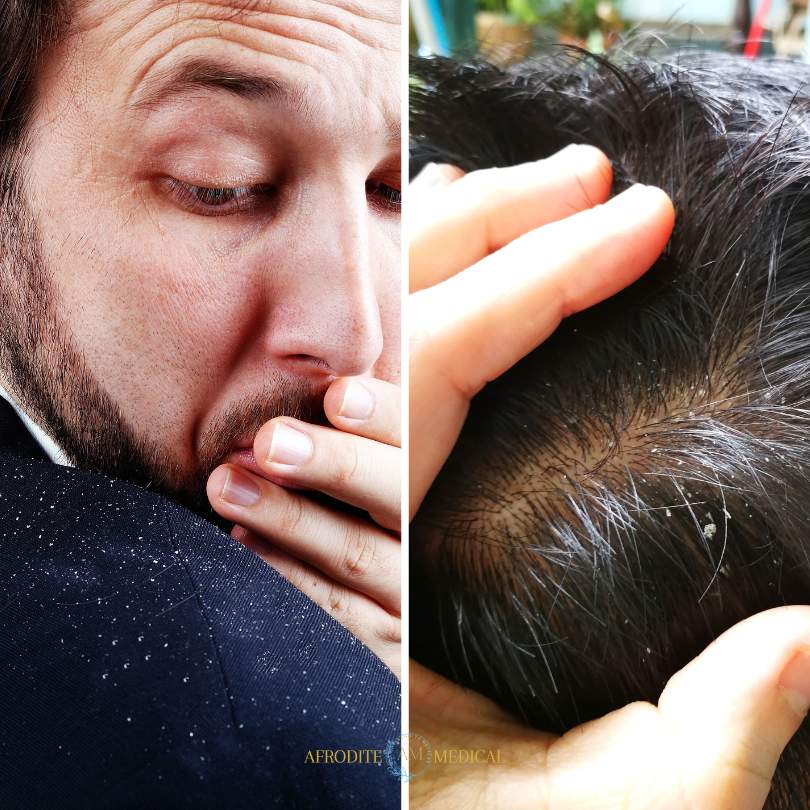
Dry Dandruff vs Oily Dandruff
When we talk about dandruff, we often refer to a single problem, but what many don't know is that there are two main types of dandruff: dry dandruff and oily dandruff. Each has its own characteristics, causes, and, above all, requires specific treatments. Understanding these differences is fundamental not only for identifying the type of dandruff that affects us, but also for choosing the most suitable treatment to restore scalp health.
Discover the differences between dry and oily dandruff. Learn to recognize them, understand their causes, and find the right solutions. With our expert advice and targeted treatments, you'll have a healthy, dandruff-free scalp.
In this article, we will explore in detail the origin and main differences between dry and oily dandruff. We will discuss the biological and environmental causes that contribute to each condition and present targeted solutions that can help you effectively manage these annoying problems.
Read on to discover how you can get rid of dandruff and keep your hair and scalp healthy and irritation-free.
Definition and Origin of Dandruff
Dandruff, scientifically known as pityriasis capitis, is a dermatological condition that affects the scalp, characterized by the presence of visible flakes of dead skin. To better understand how to tackle it, it is important to know the two main forms in which it presents itself: dry dandruff and oily dandruff.
Dry Dandruff
This form of dandruff is typically caused by insufficient sebum production, which makes the scalp excessively dry. The flakes are usually small, light, and white, and tend to fall easily from the hair and scalp. This type of dandruff is more common in cold, dry climates, where the air can further strip moisture from the scalp.
Oily Dandruff
Conversely, oily dandruff is associated with excessive sebum production. The flakes are larger, yellowish in color, and often stick to the hair and scalp, creating a greasy sensation. This type of dandruff can also be accompanied by itching and redness, due to the irritation caused by the proliferation of the Malassezia fungus, which thrives in oil-rich environments.
Origin of Dandruff
The origin of dandruff can be attributed to various factors, ranging from genetic predispositions to environmental influences, as well as imbalances in the microbial flora of the scalp. The Malassezia fungus, naturally present on the skin of many people, plays a key role in the development of both types of dandruff. Under normal conditions, this fungus coexists in balance with our body, but certain factors such as hormonal changes, stress, dietary imbalances, or alterations in the pH of the scalp can disturb this balance, causing the fungus to grow excessively and lead to skin flaking.
This set of factors makes it clear how important it is
not only to treat the symptoms of dandruff, but also to understand and address the underlying causes to achieve lasting results and significantly improve scalp health.
Differences between Dry and Oily Dandruff
Correctly identifying whether you suffer from dry or oily dandruff is essential to choose the most effective treatment. Although both are forms of dandruff, their characteristics and associated symptoms can vary significantly.
Characteristics of Dry Dandruff
Dry dandruff manifests as small, dry, white flakes that easily detach from the scalp. This type of dandruff is often the result of heated indoor air during winter that further dries the skin, or frequent washing with harsh shampoos that strip the scalp of its natural oils. Dry dandruff is not usually associated with significant redness or inflammation of the scalp, which makes it less irritating than oily dandruff, but it can be just as embarrassing due to the visibility of the flakes.
Characteristics of Oily Dandruff
Conversely, oily dandruff is characterized by larger, oily flakes that adhere to the hair and scalp. These flakes can have a yellowish hue due to excess sebum. Oily dandruff can also lead to more intense itching and a burning sensation, due to irritation and inflammation caused by the overgrowth of the Malassezia fungus. Managing this type of dandruff requires treatments that not only remove flakes but also regulate sebum production and soothe inflammation.
Implications for Scalp Health
Understanding these differences is crucial because the treatment strategy for dry dandruff should aim to hydrate and nourish the scalp, while the treatment for oily dandruff should focus on products that deeply cleanse and regulate sebum production. A wrong approach could not only be ineffective but could also aggravate the problem.
In the context of treatments, it is essential to select products formulated to specifically meet the needs of the type of dandruff being addressed. For example, for dry dandruff, a nourishing and moisturizing shampoo is recommended that restores the natural balance of the scalp without aggravating dryness (LP Leniplus Anti-dandruff Shampoo by Natua).

Instead, for oily dandruff, a more intensive two-step treatment:
First the Leniplus Anti-dandruff Kit

followed by a cycle with the DEPUR Detox Starter Kit

can help normalize scalp conditions and reduce excess sebum.
Understanding these differences helps to make informed choices about which products to use, ensuring a more effective and targeted treatment for scalp well-being.
Conclusions
Distinguishing between dry dandruff and oily dandruff is not just a matter of managing aesthetic discomfort, but an essential step towards restoring scalp health. Each type of dandruff requires a specific approach that considers the underlying causes and the peculiarities of the condition.
For dry dandruff, the main goal is to restore hydration and nourish the scalp. The Leniplus line products are ideal in this case, as they offer delicate treatments that hydrate and soothe the scalp without aggravating dryness. These products are formulated to deeply nourish, restoring balance and health to the scalp.
In the case of oily dandruff, it is crucial to regulate sebum production and reduce inflammation. Initially, the Leniplus Anti-dandruff Kit can be used to address the problem with a gentle but effective approach. However, for more persistent cases, a complementary treatment with Natua's DEPUR Detox Kit is recommended. This intensive program helps to purify the scalp from impurities and excess sebum, offering a long-lasting solution to keep the scalp clean and healthy.
In conclusion, regardless of the type of dandruff, it is essential to choose specific products that not only treat the symptoms but also the root causes. The LENIPLUS and DEPUR lines by Natua represent reliable and quality solutions that can transform scalp health, freeing individuals from the discomfort of dandruff.
For any other questions you may have about dandruff or the most suitable treatment, do not hesitate to contact us; Afrodite Medical's trichologists will be at your disposal for any clarification.
FAQs on Dry vs. Oily Dandruff
❓ What is the main difference between dry and oily dandruff?
👩🏻💻 Dry dandruff presents with white, small, and dry flakes, while oily dandruff has yellowish, larger, and greasy flakes that adhere to the scalp.
❓ Can I use the same shampoo for both types of dandruff?
👩🏻💻 No, it is better to use specific shampoos. For dry dandruff, gentle and moisturizing shampoos are recommended, while for oily dandruff, antifungal and sebum-regulating shampoos are more suitable.
❓ Is dandruff contagious?
👩🏻💻 No, dandruff is not contagious. It is a scalp disorder that can be influenced by internal and external factors but is not transmitted from person to person.
❓ Can stress cause dandruff?
👩🏻💻 Yes, stress can be a trigger for both dry and oily dandruff, affecting the scalp's balance.
❓ How often should I wash my hair if I have dandruff?
👩🏻💻 Washing frequency depends on the type of dandruff. Generally, for oily dandruff, you might need to wash your hair more often, while for dry dandruff, it's important not to overdo it to avoid further drying out the scalp.
❓ Are there effective natural remedies for dandruff?
👩🏻💻 Some natural remedies like tea tree oil, aloe vera, or apple cider vinegar can help, but it's always best to consult a trichologist for personalized and effective treatment.
❓ Can dandruff cause hair loss?
👩🏻💻 Dandruff itself does not directly cause hair loss, but if left untreated, it can lead to scalp inflammation that could affect the health of hair follicles.
❓ How long does it take to eliminate dandruff with proper treatment?
👩🏻💻 With appropriate treatment, improvements can be seen in 2-4 weeks. However, for some more persistent cases, it might take longer.